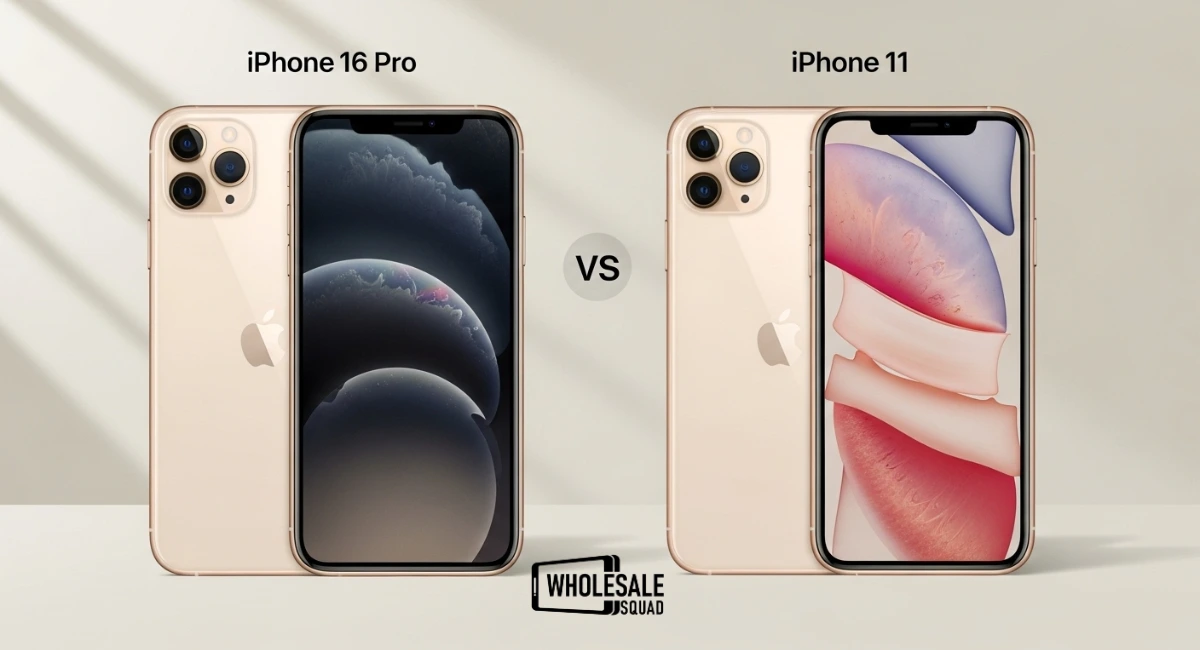
iPhone 16 Pro vs iPhone 11: Detailed UK Comparison by WholesaleSquad
The comparison between the iPhone 16 Pro vs iPhone 11 remains one of the most searched upgrade decisions in the UK smartphone market in 2025. Buyers are not only comparing two Apple devices, but also deciding between an older budget-friendly iPhone and a modern flagship built for performance, photography, and long-term use.
Featured Answer
The iPhone 16 Pro is significantly better than the iPhone 11 in 2025 because it offers a faster A18 Pro chip, a professional triple 48MP camera system, a 120Hz OLED display, and much longer software support.
The iPhone 11 is still usable in 2025 for basic tasks like calls, messaging, browsing, and light social media, but it lacks modern performance, camera quality, and future-proofing.
Quick Semantic Verdict
For UK buyers, the iPhone 16 Pro is the best choice for high performance, professional photography, gaming, and long-term investment.
The iPhone 11 is suitable for budget users, secondary phones, and basic smartphone usage where cost matters more than performance.
Full Semantic Specifications Comparison
| Feature | iPhone 16 Pro | iPhone 11 |
|---|---|---|
| Display | 6.3-inch OLED Super Retina XDR, 120Hz ProMotion | 6.1-inch Liquid Retina LCD, 60Hz |
| Resolution | 2796 × 1290 | 1792 × 828 |
| Chipset | Apple A18 Pro (AI-powered performance) | Apple A13 Bionic |
| RAM | 8GB | 4GB |
| Rear Camera System | Triple 48MP system + LiDAR scanner | Dual 12MP system |
| Zoom Capability | 5x optical zoom | 2x optical zoom |
| Front Camera | Advanced TrueDepth with cinematic features | Standard 12MP TrueDepth |
| Battery Performance | Optimized all-day battery with MagSafe | 3110mAh standard battery |
| Charging | MagSafe wireless + fast charging | Lightning wired charging |
| Refresh Rate | 120Hz adaptive ProMotion | 60Hz standard refresh |
| Software Support | Long-term iOS updates (future-proof) | Limited remaining update cycle |
| UK Market Position | Premium flagship (£900+) | Budget/refurb (£200–£350) |
Design and Build Quality (Modern Flagship vs Classic iPhone)
The iPhone 11 features a durable aluminium frame with a glossy glass back and rounded edges, making it practical and comfortable for daily UK usage. It is still widely used due to its simple and reliable design language.
The iPhone 16 Pro introduces a premium titanium frame, thinner bezels, and a matte textured glass finish. The design feels more refined, lighter in hand, and significantly more modern compared to older Apple generations.
From a semantic perspective, this comparison highlights a clear shift from “practical durability” to “premium engineering and flagship identity.”
Display Technology Comparison (LCD vs OLED 120Hz Experience)
The iPhone 11 uses a Liquid Retina LCD display with 60Hz refresh rate. It delivers acceptable brightness and color accuracy but lacks modern contrast depth and smooth scrolling.
The iPhone 16 Pro uses a Super Retina XDR OLED panel with 120Hz ProMotion technology. This results in deeper blacks, higher brightness, adaptive refresh rates, and significantly smoother UI performance.
In real UK user experience, this means:
- iPhone 11 feels standard and functional
- iPhone 16 Pro feels ultra-smooth and premium
Performance Comparison
The iPhone 11 is powered by the A13 Bionic chip, which still supports everyday tasks such as WhatsApp, Instagram, YouTube, and casual gaming without major issues.
The iPhone 16 Pro uses the A18 Pro chip, designed for high-performance computing, AI processing, and advanced multitasking. It handles heavy gaming, 4K editing, AR applications, and professional workloads without slowdown.
Semantic performance conclusion:
- iPhone 11 = entry-level stable performance
- iPhone 16 Pro = flagship-level computational power
The performance gap is one of the largest across Apple generations.
Camera System Comparison
The iPhone 11 includes a dual 12MP camera system with Night Mode and Smart HDR, suitable for everyday photography and social media usage.
The iPhone 16 Pro features a triple 48MP camera system with LiDAR support, advanced computational photography, cinematic video modes, and 5x optical zoom.
Semantic camera difference:
- iPhone 11 focuses on “basic capture quality”
- iPhone 16 Pro focuses on “professional content creation and cinematic output”
For UK content creators, the difference is critical.
Battery Life and Charging Experience
The iPhone 11 offers reliable full-day battery life under moderate usage but uses older charging technology and less efficient hardware.
The iPhone 16 Pro improves power efficiency significantly with optimized chipset architecture, MagSafe wireless charging, and faster charging speeds.
In real-world usage:
- iPhone 11 = stable but older efficiency
- iPhone 16 Pro = optimized for heavy daily workloads
Software Support and Future-Proofing
The iPhone 16 Pro benefits from long-term iOS updates, advanced AI features, and future Apple ecosystem integration.
The iPhone 11 is closer to the end of its major software support cycle, meaning fewer new features and reduced long-term value.
Semantic insight:
software support directly impacts resale value, performance stability, and long-term usability.
Gaming and Multitasking Performance
The iPhone 11 supports casual gaming and light multitasking but struggles with high-end graphics settings and heavy apps.
The iPhone 16 Pro supports console-level gaming performance, high refresh rate gameplay, and smooth multitasking across demanding applications.
For UK gamers, this is a clear generational upgrade.
UK Price and Value Analysis
The iPhone 11 remains one of the most affordable Apple smartphones in the UK, particularly in refurbished and second-hand markets.
The iPhone 16 Pro is positioned as a premium flagship with long-term value, strong resale performance, and advanced feature set.
Semantic value breakdown:
- iPhone 11 = cost-efficient entry iPhone
- iPhone 16 Pro = long-term investment device
Pros and Cons
iPhone 11
Pros:
Affordable entry into Apple ecosystem
Reliable for basic daily use
Good build quality
Still supports modern iOS features
Cons:
Older LCD display technology
Limited performance headroom
Shorter software lifecycle
No advanced camera capabilities
iPhone 16 Pro
Pros:
Industry-leading performance
Professional-grade camera system
120Hz OLED display technology
Long-term software support
Premium titanium design
Cons:
High price point
Not necessary for basic users
Who Should Buy Which iPhone
Buy iPhone 16 Pro if you need:
High-performance smartphone usage
Professional photography and video creation
Gaming and heavy multitasking
Long-term investment in the UK market
Buy iPhone 11 if you need:
Affordable Apple device
Basic calling, messaging, and social media
Secondary or backup phone
Low-budget smartphone option
Final Semantic Verdict
The iPhone 16 Pro is a complete generational upgrade over the iPhone 11 across performance, display technology, camera systems, battery efficiency, and software longevity.
The iPhone 11 still holds value as an entry-level Apple device in the UK market, but it is no longer future-proof for demanding users.
From a semantic SEO and real-world usage perspective, the iPhone 16 Pro is the clear winner for 2025.
Frequently Asked Questions
Which is better, iPhone 16 Pro or iPhone 11
The iPhone 16 Pro is significantly better due to superior performance, camera technology, display quality, and long-term software support.
Is the iPhone 11 still worth buying in 2025 UK
Yes, but only for basic usage such as calls, messaging, and light social media.
Is upgrading from iPhone 11 to iPhone 16 Pro worth it
Yes, because it delivers a major improvement in speed, camera quality, display, and battery efficiency.
Which iPhone has a better camera
The iPhone 16 Pro has a professional-grade triple camera system, far superior to the iPhone 11.
Which iPhone is better for gaming
The iPhone 16 Pro is significantly better for gaming due to its A18 Pro chip and 120Hz display.